Traditional Morning Market of Rantepao: Gratefulness and Integration
A visit to the traditional morning market of Rantepao in Toraja, exploring the diverse commodities, cultural significance, and the spirit of gratitude among market vendors.

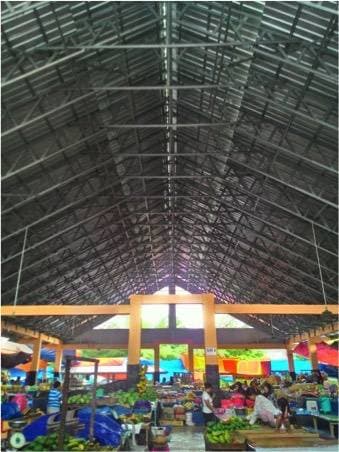
Originally published on "In Search of Makassar and Toraja" (School of Arts and Social Sciences, Monash University Malaysia). Written by Muh Ihsan Harahap. Photographs by the author.
Rantepao, 1 December 2014
At 5:00 a.m., I woke from sleep. After performing the Subuh prayer, I decided to visit the Traditional Morning Market of Rantepao, located approximately 100 meters from our accommodation at Wisma Monton. Some locals call this market "Pasar Pagi Sayur-Mayur" (Morning Vegetable Market). It's called the "morning market" because buying and selling activities occur only from 5:00 a.m. until 11:00 a.m. However, the "vegetable" designation can be misleading for first-time visitors and tourists, who might assume only vegetables are sold there.
In reality, the market offers diverse commodities beyond vegetables: various types of fish, Toraja coffee, spices, fruits, pork, buffalo meat, eggs, tofu, tempeh, and small food stalls measuring approximately 3x2 meters.
The traditional Toraja markets have undergone regulatory changes. Local government now manages Toraja's traditional markets, divided into five groups. Four large groups are managed directly by the government, while smaller markets are run by local villages. Two primary markets — Pasar Makale and Pasar Bolu — operate on a weekly rotating schedule, each attracting roughly 1,500 to 5,000 daily visitors. The Rantepao morning market is classified as a "Class II" traditional market, operating five days a week.
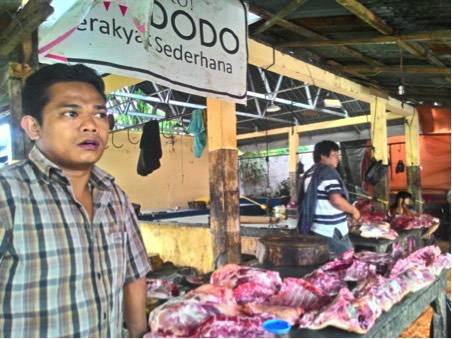 Pak Petrus
A stall selling substantial quantities of meat caught my attention. Only after Pak Petrus asked whether I was Christian did I realize I was looking at pork. Pak Petrus explained that he sells meat five days a week at the morning market, while Pasar Bolu handles sales on other days. Normally, one large pig is slaughtered daily, though demand can spike up to five animals. Pak Petrus lives merely 1 km from the market, which keeps his transportation costs affordable.
I recalled historian Terance W. Bigalke's writing about how traditional Torajan markets function not merely as commercial spaces but as places of integration between different ethnic groups. This explains why pork and buffalo meat vendors operate side by side without issue.
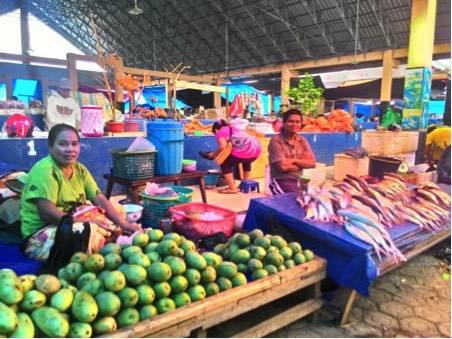 Pak Yunus
Pak Yunus sells milkfish (bandeng) at the market, transporting approximately 75-80 kilograms daily to his stall. Milkfish remains a popular choice because South Sulawesians consistently prefer it, and being farm-raised ensures year-round availability regardless of seasonal weather. Pak Yunus has four children and expressed deep pride and gratitude that his occupation supports their education — his eldest is currently attending senior high school.
When I asked about his hopes for the market, Pak Yunus responded enthusiastically about the government's recent roof renovation. The new steel-frame roof delighted vendors, who expressed genuine thankfulness for the improvement.
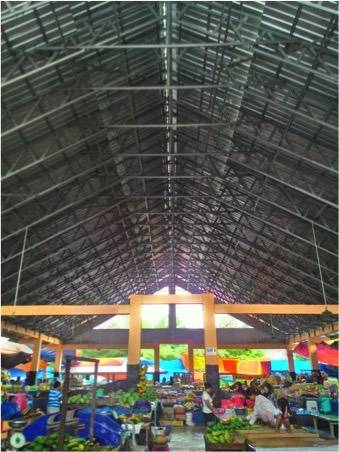 The market's new roof
This observation prompted a reflection: gratitude and simplicity are sources of happiness. The market vendors rejoiced over what might seem like a relatively modest improvement — a new roof — demonstrating a capacity for appreciation that many of us might lack. Their genuine thankfulness over such a thing might just represent the true source of happiness.
The morning market visit became one of the most memorable experiences of my time in Toraja, offering valuable lessons about social interaction that transcend mere commercial transactions.