The Footsteps of Buya Hamka in Makassar (1932-1934)
Tracing the footsteps of Buya Hamka in Makassar during the 21st Muhammadiyah Congress in 1932 and his contributions to the organization's development in South Sulawesi.

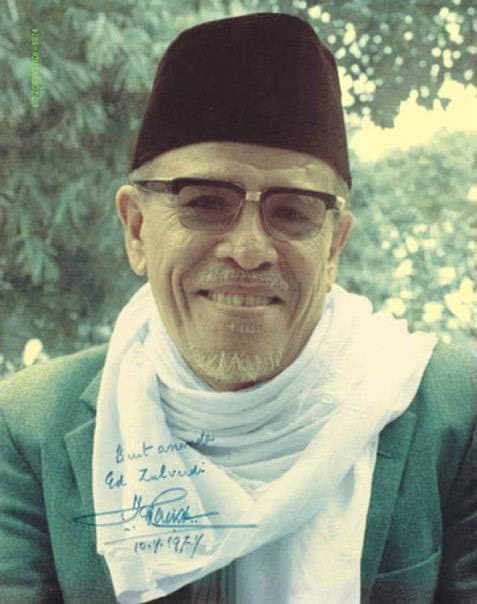
The 47th Muhammadiyah National Congress is currently taking place in the city of Makassar, from August 3-8, 2015. This national Muhammadiyah gathering, attended by approximately 300,000 members and supporters, is the third time it has been held in Makassar. The two previous congresses were held in 1971 (the 38th Muhammadiyah National Congress) and 1932 (the 21st Muhammadiyah Congress).
The 1932 Congress (at that time it was not yet called a "national congress") became an important milestone for the development of this reformist (tajdid) organization in South Sulawesi. This is especially significant considering that Indonesia had not yet gained independence and was still under Dutch East Indies governance. Moreover, this was an important era in which various independence movements were growing rapidly throughout the Dutch East Indies. It was in 1932 that the Muhammadiyah Branch Leadership of Makassar received a young scholar from West Sumatra named Haji Abdul Malik Karim Amrullah, who would later become better known as Hamka.
The 1932 Congress in Makassar
Hamka was sent to Makassar in 1932 at the request of the Muhammadiyah Branch Leadership of Makassar. Hamka had a specific mission: to inspire the spirit of the people in preparation for the 21st Muhammadiyah Congress to be held in Makassar.
According to Dr. Mustari Bosra (2008), every day no fewer than 5,000 people watched from outside the congress venue, indicating the public's enthusiasm to learn more about the organization. A total of 4 branches and 39 groups were formed within a year after this congress, where previously there had been only 2 branches and 15 groups. The number of schools and mosques also experienced very rapid growth.
The Muhammadiyah Branch Leadership of Makassar made good use of this brilliant young scholar's presence. After the Congress was held, a Madrasah Tsanawiyah (MTs, junior high school) and Muallimin were established in Makassar, and two years later (1934) an MTs was established in Majene. For the MTs in Makassar, Hamka himself served as its first principal. According to the report of the Muhammadiyah Consul for Sulawesi at the 16th Conference in 1941 in Sengkang, Muhammadiyah South Sulawesi had 6 branches and 76 groups with 7,000 members, approximately 30,000 sympathizers, 41 mosques and prayer halls, 52 Diniyah Schools (equivalent to elementary schools), 4 HIS Schools, 79 teachers, and approximately 5,000 students.
The Legacy of the 1932 Congress
The 21st Muhammadiyah Congress was important for several reasons. First, Pemuda Muhammadiyah (Muhammadiyah Youth) was established as an autonomous organization for young people. This movement actually originated from the Siswo Proyo Priyo (SPP) educated youth movement, which had grown rapidly and was then decided by the 21st Muhammadiyah Congress to become the Pemuda Muhammadiyah organization. Second, in this year Muhammadiyah decided to publish a daily newspaper, the management of which was entrusted to the Muhammadiyah Branch Leadership in Solo, which would later be named Adil. Third, this congress was the last in which KH Ibrahim served as Chairman. Previously, KH Ibrahim had led Muhammadiyah and was elected as Chairman ten consecutive times (1923-1932) during congresses that were held annually at that time.
Novels and Magazines
When we read the first chapter of the novel Tenggelamnya Kapal Van der Wijck (TKVDW -- The Sinking of the Van der Wijck) by Hamka and observe how the love tragedy of Zainuddin and Hayati unfolds, we come to understand that all of Hamka's knowledge about the places, names, and traditions of Makassar was acquired during his time in Makassar, even though the novel would not be published until 1938.
Besides the novel TKVDW, during his time in Makassar he also published a translated novel titled Laila dan Majnun (Laila and Majnun), the classic love story by the great Persian poet Nizami Ganjavi. This novel was published by Balai Poestaka, a government-owned publisher. Beyond novels, Hamka also founded two magazines while in Makassar: Majalah Tentera (4 editions) and Majalah Al Mahdi (9 editions). In this year, Hamka also published a book titled Arkanul Islam.
Conflict
Hamka's footprint in Makassar did not end there. During his time in Makassar (1932-1934), Hamka was also involved in conflicts and disputes through the media. The story began in 1927, when the Partai Sarekat Islam (PSI) expelled all Muhammadiyah members from the party. That year marked the beginning of a prolonged conflict between PSI and Muhammadiyah. In South Sulawesi, this conflict was represented by the Al-Wafd newspaper belonging to Sarekat Islam and the Tentara Islam newspaper belonging to Muhammadiyah, led by Mansur Al Yamani, the person credited as the first advocate of Muhammadiyah in South Sulawesi.
Through Al-Wafd, H.A. Mawangkang criticized Muhammadiyah for taking a cooperative path with the Dutch and accepting subsidies from the "infidel" colonial government. Hamka then responded through the Tentara Islam newspaper by criticizing Yusuf Sammah and other PSI members who "could only make noise" and "showed no real work." Hamka also criticized the existence of a lawyers' institute within PSII which -- according to Hamka -- was only interested in money and "would only work if paid by litigants."
This conflict extended to very detailed matters. Tentara Islam criticized Al-Wafd for, after being led by Yusuf Sammah, carrying advertisements deemed "extremely disgusting" and pornographic in nature. Another criticism from Tentara Islam concerned the five daily obligatory prayers, which were beginning to be taken lightly by PSI leaders and members.
Epilogue
The 47th Muhammadiyah National Congress being held in Makassar will soon conclude, and thankfully it has proceeded safely and orderly. The extraordinary growth of Muhammadiyah as seen in South Sulawesi today is the result of a century of hard work by its founders, preachers, cadres, and sympathizers. Among them was Buya Hamka, who was still very young when carrying out his missionary duties in Makassar -- just 24 years old. May the 47th Muhammadiyah National Congress also give rise to a new generation as brilliant as Buya Hamka: a scholar, literary figure, philosopher, and writer remembered in the history of this republic.
Bulukumba, August 5, 2015
Published in Tribun Timur daily, August 7, 2015 edition.